Solving Thermal and Space Constraints in Compact Industrial Automation Hardware
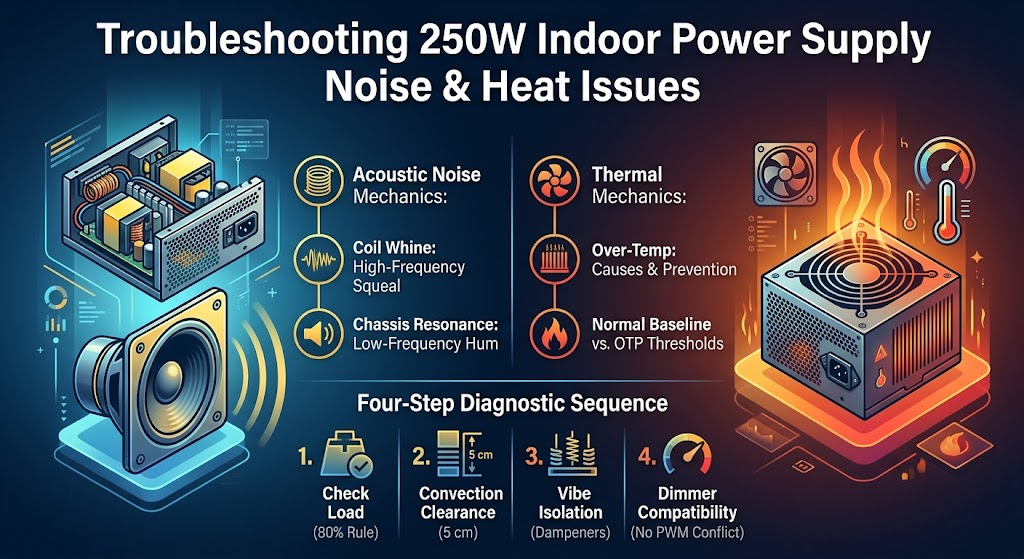
Industrial control cabinets, robotic arm base controllers, and edge-computing automation hubs are experiencing continuous miniaturization. As mechanical engineers compress DIN-rail enclosures and NEMA-rated junction boxes, electrical engineers face a daunting challenge: delivering stable, high-wattage DC power within extremely restricted physical footprints without exceeding junction temperature limits.
Standard off-the-shelf industrial power supplies generally rely on bulky aluminum heatsinks and ambient forced-air cooling. When placed inside closed NEMA enclosures where natural convection is impeded, these off-the-shelf units experience severe thermal throttling, forcing system designers to heavily derate output capacity—often by as much as 40% to 50% at elevated ambient temperatures ($>50^\circ\text{C}$).
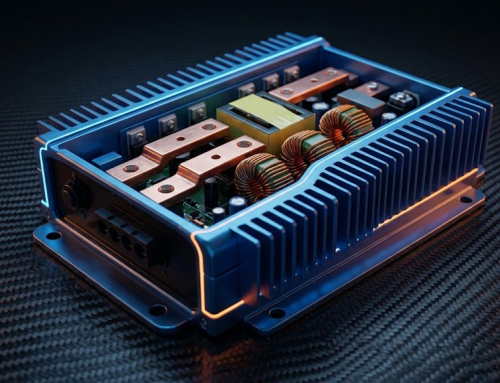
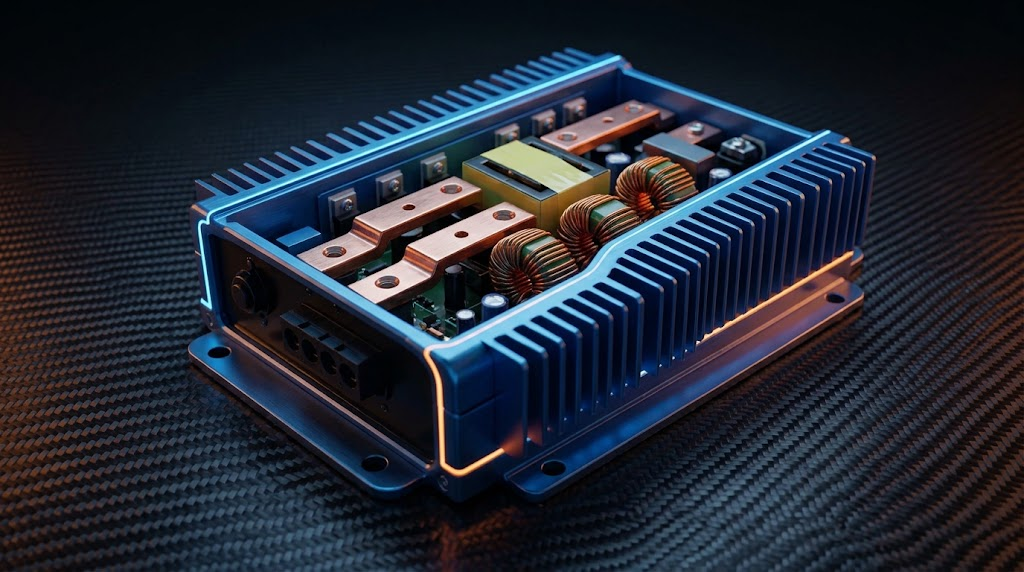
Overcoming these spatial and thermal bottlenecks requires rethinking layout geometry, magnetic component integration, and primary heatsinking paths. Modern switching topologies—such as LLC resonant converters paired with active Power Factor Correction (PFC)—achieve power conversion efficiencies exceeding 93% to 95%. High switching frequencies allow designers to reduce the physical volume of planar transformers and filter inductors. Furthermore, heat-generating semiconductors (MOSFETs and Schottky diodes) can be directly coupled to custom aluminum chassis plates via ceramic thermal insulators, turning the outer enclosure itself into the primary heat sink.
When integrating power conversion modules into dense mechanical housings, specifying a specialized custom space power supply ensures that circuit board profiles, terminal block orientations, and mounting hole configurations perfectly align with custom chassis constraints. This eliminates structural compromises, minimizes EMI coupling loop areas, and guarantees long-term MTBF in high-density automation machinery.