The Ultimate Guide to Slim LED Power Supplies: Selecting the Right 12V/24V Driver & Finding the Best Mean Well Alternatives
For hardware engineers, LED lighting manufacturers, and industrial project buyers, choosing the right LED driver is not just about matching voltage and wattage. It’s about thermal management, spatial constraints, long-term stability, and budget optimization.
In today’s competitive market, while tier-one brands like Mean Well (明纬) offer standard options, smart sourcing managers are increasingly turning to reliable, cost-effective manufacturers for high-quality alternative solutions.
This comprehensive guide breaks down the critical technical metrics for selecting a slim power supply, analyzes typical high-efficiency models, and provides a direct cross-reference strategy to optimize your bill of materials (BOM).
Why Spatial Efficiency Matters: The Rise of Slim Power Supplies
In modern industrial and commercial environments, space is premium. Whether you are designing ultra-thin lightboxes, retail display shelving, slim linear lights, or compact industrial control cabinets, bulky traditional power supplies are no longer viable.
┌────────────────────────────────────────────────────────┐
│  Traditional PSU: ■■■■■■■■■■ (Bulky, Hard to Hide)     │
├────────────────────────────────────────────────────────┤
│  Slim Power Supply: ▬▬▬▬▬ (Ultra-Thin, Invisible Fit)   │
└────────────────────────────────────────────────────────┘
A slim power supply is engineered with a narrow profile (often less than 30mm in width or height). This structural optimization offers several advantages:
-
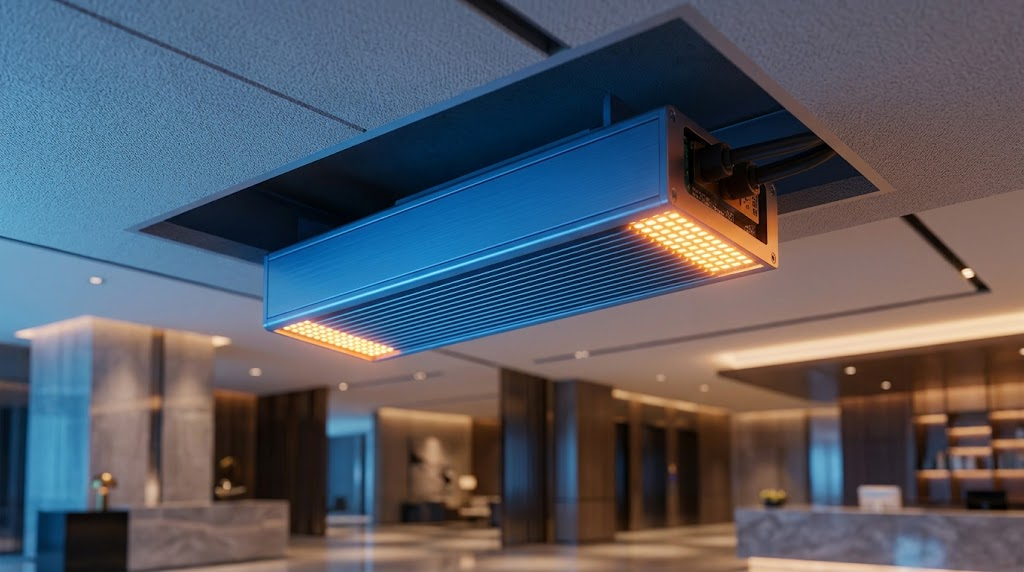
Invisible Installation: Easily fits into narrow aluminum profiles, recess tracks, or false ceilings without compromising architectural aesthetics.
-
Improved Airflow: The elongated shape allows better heat dissipation when mounted along metal frames, reducing the risk of localized thermal bottlenecks.
-
Reduced Transportation Cost: Sleeker profiles translate directly to lower packaging volume and reduced international shipping fees.
Key Technical Metrics for B2B Selection
When evaluating a LED driver for commercial projects, relying solely on basic specs like “24V 250W” is a common trap. To ensure zero-failure operation over a 5-year lifespan, engineers must inspect the following five metrics:
I. Constant Voltage (CV) vs. Constant Current (CC)
Most commercial LED strip installations utilize Constant Voltage systems where the current is regulated on the strip itself. If your project uses linear strips, neon flex, or lightboxes, you must select a constant voltage sanpu led power supply. Conversely, high-power single LEDs or outdoor architectural floodlights often require constant current drivers.
II. IP Protection Ratings: IP20 vs. IP67
Where will your power supply be housed?
-
IP20 (Indoor / Dust-protected): Ideal for indoor signage, retail shelves, and smart home lighting. These usually feature perforated metal enclosures for passive cooling. For instance, a 250w indoor led driver 24v 10.4a ip20 represents the gold standard for high-density indoor commercial linear lighting.
-
IP67 (Outdoor / Waterproof): Fully sealed with silicone or epoxy potting. Essential for outdoor facades, landscape lighting, and high-humidity environments.
III. Active PFC vs. Passive PFC
Power Factor Correction (PFC) determines how efficiently the driver draws power from the grid:
-
Active PFC (Power Factor > 0.95): Reduces harmonic distortion and grid load. High-power installations (over 150W) in Europe and North America strictly require Active PFC for commercial compliance (CE/FCC).
-
Passive PFC (Power Factor 0.5 – 0.7): Suitable for low-wattage, cost-sensitive domestic applications.
IV. Derating Factor & Thermal Management
Never run an industrial power supply at 100% capacity continuously. The “80% Rule” is the industry benchmark. If your LED load is 200W, you should select at least a 250W driver. Operating at 80% load reduces component stress, maintains a lower junction temperature, and significantly extends the capacitors’ lifespan.
High-Performance Model Analysis: CFX150 & PS600 Series
To understand how high-density engineering translates to actual products, let us examine two benchmark series from sanpu: the compact cfx150 and the heavy-duty ps600-h1v24.
The CFX150 Series: The Compact Linear Champion
The cfx150 is specifically engineered for mid-range, ultra-slim installations such as commercial showcase lights and mirror backlights.
-
Form Factor: Extremely narrow width allowing placement inside standard aluminum tracks.
-
Protection Circuitry: Auto-recovery short-circuit protection, over-load clamp, and over-voltage shutdown.
-
Thermal Efficiency: Advanced aluminum housing that acts as a giant heatsink, eliminating the need for noisy mechanical cooling fans.
The PS600-H1V24: High-Power Stability
For heavy-duty applications requiring massive output without bulk, the ps600-h1v24 represents the pinnacle of high-power density engineering.
PS600-H1V24 Core Features:
┌──────────────────────────────┬──────────────────────────────┐
│  Output Voltage: 24V DC      │  Active Cooling: Built-in Fan│
├──────────────────────────────┼──────────────────────────────┤
│  Efficiency: >89%            │  Certificates: CE, RoHS, FCC │
└──────────────────────────────┴──────────────────────────────┘
The ps600-h1v24 handles large-scale LED installations, keeping voltage drops to an absolute minimum across long cable runs.
Mean Well Alternative Strategy: Optimize Your Sourcing BOM
Mean Well is the household name in the switching power supply industry. However, for many custom projects, OEM designs, and highly competitive commercial bids, Mean Well’s rigid pricing structure, long lead times, and lack of customization present severe business obstacles.
By identifying equivalent alternatives from a dedicated manufacturer like sanpu power, sourcing managers can unlock significant advantages:
-
Cost Reduction (20% – 40%): Directly sourcing from a vertical manufacturer eliminates distributor markups.
-
Flexible Customization (OEM/ODM): Modify wire lengths, connector types, shell dimensions, or customize specific constant power curves which big brands rarely accommodate for medium-sized orders.
-
Stable Supply Chain: Direct factory communication guarantees accurate lead times, avoiding the global allocation delays common with major brands.
Equivalent Cross-Reference Comparison Table
Here is a direct engineering cross-reference chart showing how standard models compare to elite alternatives:
| Target Performance / Spec | Mean Well Model | Sanpu Equivalent Alternative | Major Advantage |
|---|---|---|---|
| 150W Slim Indoor 12V/24V | LRS-150F / LST-150 | cfx150 Series | Sleeker form factor, easier integration in narrow profiles |
| 250W Slim Indoor 24V IP20 | LRS-250-24 | 250w indoor led driver 24v 10.4a ip20 | Passive cooling, noise-free, optimized profile |
| 600W Industrial High-Power 24V | SE-600-24 | ps600-h1v24 | Compact footprint, more competitive cost per watt |
| Flexible Wide-Range Load | HLG / ELG Series | Custom constant power Series | Custom current settings, faster production lead times |
Disclaimer: All competitor model names are trademarks of their respective owners. Cross-references are based on functional and electrical equivalency compiled from published datasheets.
Industrial Quality Control: Inside the Sanpu Factory
To replace industry-standard brands, a power supply must prove its reliability through ruthless testing. Standard switching power supplies can fail prematurely due to component degradation under thermal stress. To prevent this, every san power unit undergoes strict quality gates before leaving the assembly line:
[Component Sourcing] ──> [SMT Assembly] ──> [100% Full Load Burn-in (4 Hours)] ──> [ATE Testing] ──> [QC Approval]
1. 100% Full Load Burn-in Testing
Every single LED driver is subjected to a rigorous 4-hour, 100% full-load burn-in test inside a high-temperature chamber. This process forces “early-life failures” to happen inside the factory, rather than at your client’s project site.
2. High-Pot & Leakage Current Validation
To guarantee human safety and international compliance, every unit undergoes high-voltage isolation (Hi-Pot) testing up to 3000V AC between input and output, ensuring complete physical safety.
3. Component Selection
B2B buyers know that a power supply is only as good as its electrolytic capacitors. Premium grade, high-temperature (105°C rated) capacitors are used to ensure that even under continuous operation, the capacitance does not degrade prematurely.
How to Avoid Common Pitfalls in LED Power Installations
Even with a premium san pu driver, incorrect field installation can lead to system errors. Avoid these three common field mistakes:
Pitfall A: Severe Voltage Drop Over Long Cable Runs
Low-voltage DC (especially 12V and even 24V) suffers from resistance over distance. If you install a 250w indoor led driver 24v 10.4a ip20 15 meters away from the LED strip, the end of the strip will look dim.
-
Solution: Always use the correct gauge wire (AWG) based on the current load, or place the ultra-slim power supply closer to the load by taking advantage of its slim footprint.
Pitfall B: Inadequate Ventilation
While many slim drivers are “fanless” (relying on convection cooling), they still need ambient air to transfer heat. Sealing a fanless driver inside a completely airtight wooden cavity without a metal backing plate will severely shorten its life.
-
Solution: Mount the driver directly against an aluminum track or metal sheet to act as a supplementary heat sink.
Pitfall C: Forgetting Inrush Current
When a switching power supply is turned on, it draws a massive, instantaneous current spike (inrush current) to charge its internal capacitors. If you have 10 units of 150W drivers connected to a single circuit breaker, the combined inrush current can instantly trip the breaker.
-
Solution: Group your power lines onto separate breakers, or utilize drivers with soft-start circuitry.
Conclusion: Take Control of Your Project Sourcing
In the commercial lighting and industrial automation space, relying on a single, expensive legacy brand is a high-risk procurement strategy. Embracing highly specialized, robust alternatives allows your business to offer competitive project bids, customize physical designs, and secure superior profit margins.
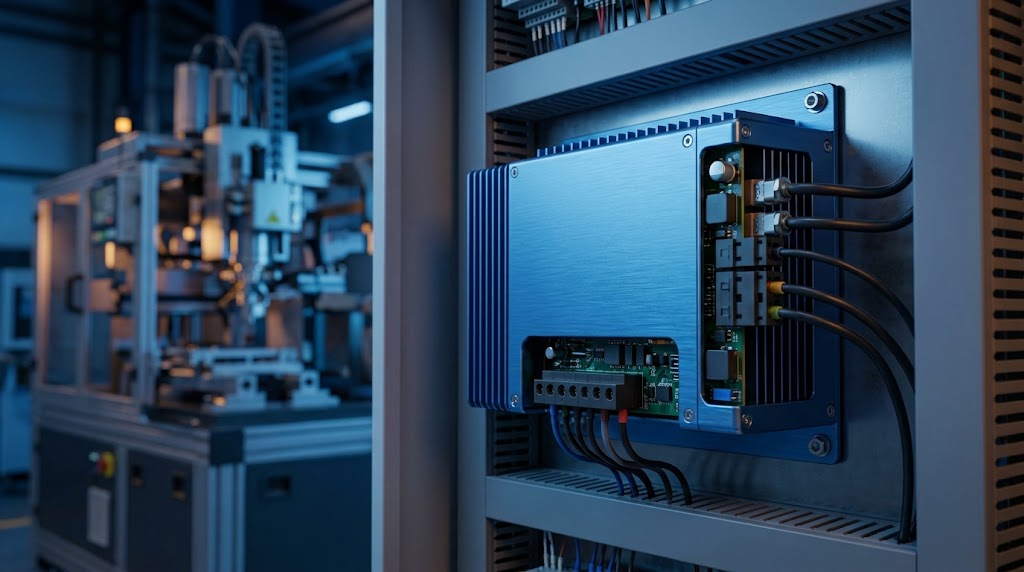
Whether your next project demands a low-profile cfx150 for custom linear lighting, a silent 250w indoor led driver 24v 10.4a ip20 for indoor lightboxes, or a heavy-duty ps600-h1v24 to drive dense automation equipment, selecting the right partner is the ultimate key to project success.
Need Expert Assistance with Your Bill of Materials (BOM)?
Send us your current project requirements or the competitor part numbers you are using today. Our dedicated application engineers will provide a free, comprehensive cross-reference and custom pricing quotation within 24 hours.
👉 Contact Sanpu Power Today to Optimize Your Lighting Project