The Ultimate Guide to Slim LED Power Supplies & 24V Drivers: Selection, IP Ratings, and Troubleshooting
Introduction
In the modern linear lighting, signage, and industrial automation industries, the demand for compact, efficient, and reliable power sources has reached an all-time high. Designers, engineers, and contractors constantly face a shared challenge: How do you fit a high-capacity power source into restricted, narrow architectural spaces without compromising safety or performance?
This is where the slim power supply (also known as a low-profile power supply or thin LED driver) becomes an indispensable component. However, selecting the ideal power supply involves more than just matching voltage and current. You must account for thermal management, protection topologies, and environmental ingress ratings (such as IP20 vs. IP67).
Whether you are looking for a 250w indoor led driver 24v 10.4a ip20 for a commercial interior project or diagnosing why your low-voltage LED strips are flickering, this comprehensive guide will walk you through everything you need to know to make an informed, professional procurement decision.
Ready to specify for your project?
View the technical specifications and pricing for our best-selling 250W 24V Slim LED Driver here.
Chapter 1: Understanding the Rise of Slim Power Supplies
1.1 What is a Slim Power Supply?
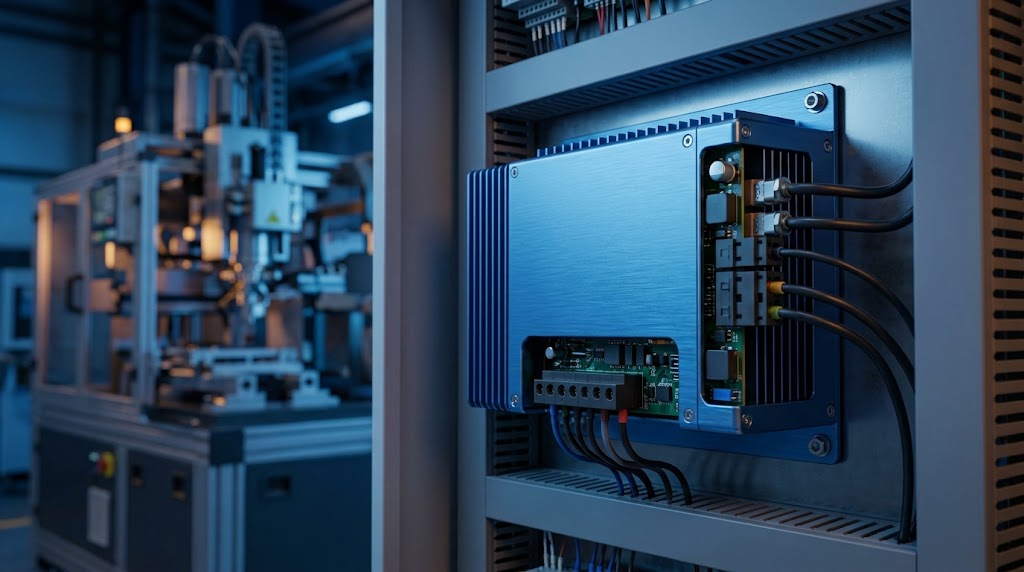
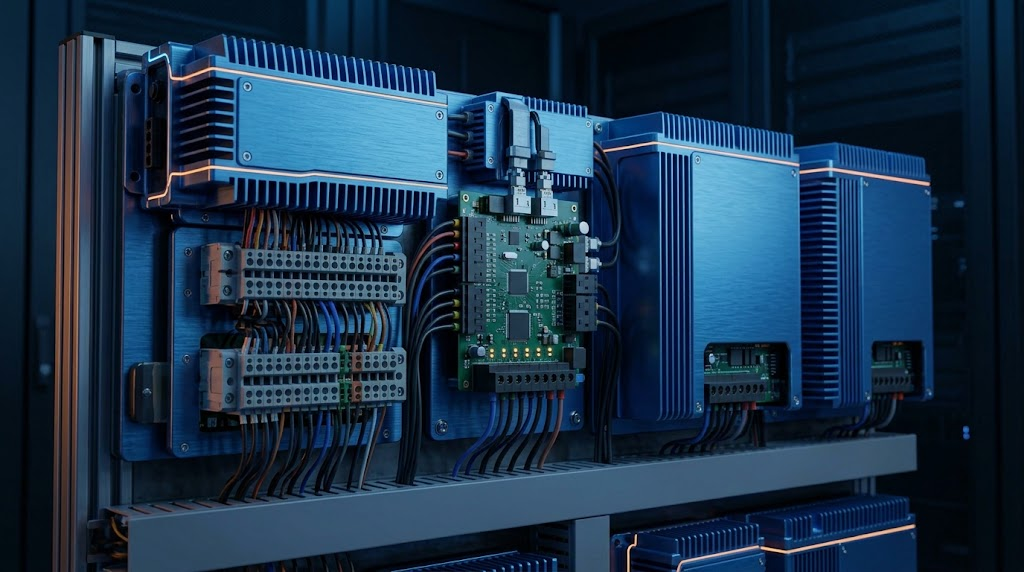
A slim power supply is an AC-to-DC switching power supply (SMPS) engineered with a significantly reduced height and width profile compared to standard enclosed “mesh-cage” power units. By utilizing advanced topology configurations, high-frequency transformers, and highly integrated premium semiconductors, manufacturers can pack massive power capacities into highly compact, elongated aluminum housings.
1.2 Why Modern Applications Demand Low-Profile Enclosures
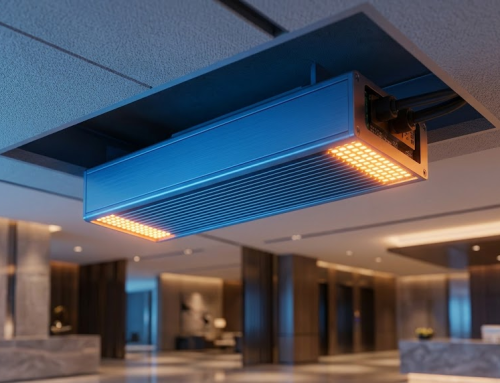
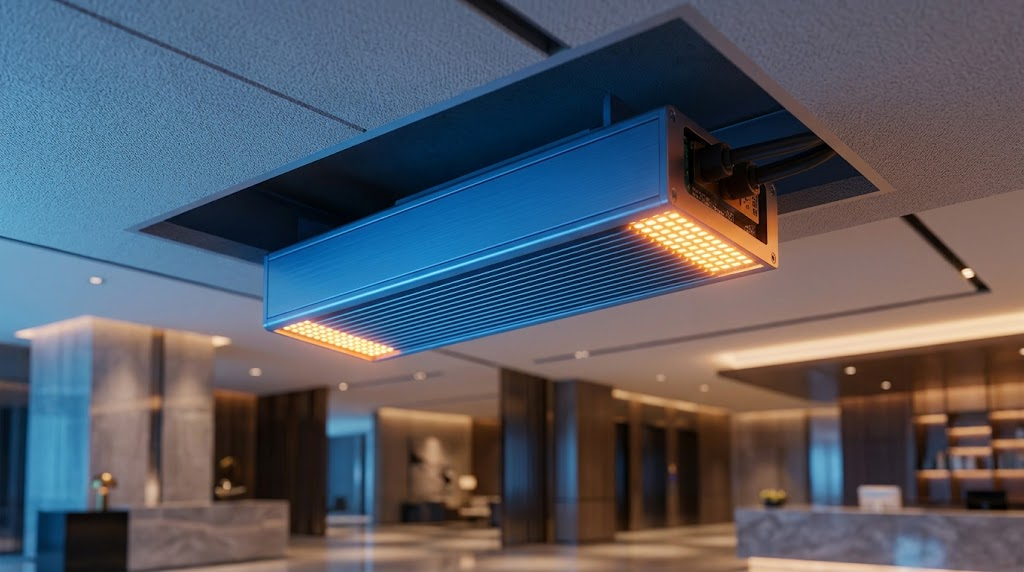
The trend toward minimalist architecture and seamless interior design has directly influenced the electronics sector. Traditional bulky power supplies are impossible to hide inside thin light boxes, aluminum LED profiles, mirror frames, or drop-ceiling recesses.
Key advantages of implementing low-profile form factors include:
-
Aesthetic Integration: Seamlessly hides within standard 20mm or 30mm architectural aluminum tracks.
-
Space Optimization: Frees up critical space in dense industrial control cabinets and automated machinery.
-
Weight Reduction: Aluminum slim-line enclosures offer high structural integrity with minimal weight, reducing structural stress on suspended ceilings or temporary exhibition displays.
Chapter 2: Decoding LED Driver Specifications: 12V vs. 24V and Wattage Calculations
When reviewing your GSC search performance data, technical queries like 250w indoor led driver 24v 10.4a ip20 represent highly transactional B2B buyers. Let’s break down exactly what these parameters mean and how to calculate them accurately for any engineering project.
2.1 Voltage Drop: Why 24V is Often Superior to 12V
When planning long runs of LED strip lights or architectural linear fixtures, choosing between 12V and 24V is a foundational step.
Where $I$ is the current and $R$ is the resistance of the copper wire. For a given wattage, doubling the voltage cuts the required current in half ($I = P / V$).
-
12V DC Systems: Experience higher current levels. Over longer distances (typically exceeding 5 meters), this results in a visible voltage drop, causing the far end of the LED strip to appear dimmer or shift in color temperature.
-
24V DC Systems: Carry half the amperage of a 12V system for the exact same power output. This drastically minimizes voltage drop, allowing for longer continuous runs, more uniform brightness, and the use of thinner, less expensive gauge wiring.
2.2 Amperage and Wattage Alignment
Let’s analyze the exact electrical relationship behind the high-performing GSC search term: 250W 24V 10.4A.
Using Ohm’s Law and the power formula:
This specific configuration delivers a highly robust 10.4 Amps of continuous current. This makes it ideal for running high-density LED tapes (such as 120 LEDs/meter or COB LED strips) across extensive commercial layouts.
2.3 The Essential 80% Power Rule for Longevity
One of the most common causes of premature LED driver failure is running the unit at its absolute maximum capacity.
The 80% Rule of Thumb: For optimal performance, safety, and lifespan, continuous loads applied to a switching power supply should not exceed 80% of its rated maximum wattage.
For a 250W LED driver, the maximum continuous load you should connect is:
This 20% overhead acts as a buffer against startup current surges (inrush current), line voltage fluctuations, and ambient temperature spikes, ensuring your system runs cool and lasts for its intended 50,000-hour lifespan.
“Not sure if 250W is the right fit? Check our complete 24V Slim Series lineup to compare output options.”
Chapter 3: Demystifying Ingress Protection (IP) Ratings for Power Supply Cases
The search phrase ip rated power supply cases highlights a massive user pain point: Environmental protection selection. Choosing the wrong case style can lead to catastrophic system short-circuits or thermal runaway.
3.1 What Do the IP Digits Mean?
An Ingress Protection (IP) rating consists of two distinct digits specified by the IEC (International Electrotechnical Commission):
-
First Digit (0-6): Indicates the level of protection against solid objects and hazardous dust particles.
-
Second Digit (0-9K): Indicates the level of protection against moisture ingress and liquid penetration.
3.2 IP20 vs. IP67: Internal Construction and Application Differences
| Feature | IP20 (Indoor Slim) | IP67 (Waterproof Outdoor) |
| Solid Protection | Protected against finger-sized objects (>12.5mm). No dust sealing. | 100% Dust-tight. Total protection against particle entry. |
| Liquid Protection | Zero protection against water, humidity, or condensation. | Waterproof. Withstands temporary immersion up to 1 meter for 30 mins. |
| Cooling Mechanism | Natural air convection via perforated or open-ended aluminum casing. | Thermal heat dissipation through full internal silicone/epoxy potting. |
| Primary Use Cases | Interior light boxes, indoor display cases, retail shelving. | Outdoor architectural wash lights, billboard signage, humid environments. |
3.3 The Role of Aluminum Case Design in Heat Dissipation
For slim power supplies, the enclosure isn’t just a shield—it functions as a vital heat sink. Because slim units have a compact surface area, high-grade extruded aluminum cases with integrated cooling fins are essential.
In indoor IP20 slim models, ventilation slots allow ambient air to pull heat away from internal inductors and capacitors. In outdoor IP67 models, the internal components are completely encapsulated in a specialized thermally conductive potting compound, which transfers heat directly out to the heavy-duty aluminum outer shell.
Chapter 4: Key Quality Indicators and Safety Protections in B2B Procurement
When buying power supplies at wholesale scale, low-cost units often cut corners on internal components. High-quality slim power supplies must contain reliable protection circuit topologies.
4.1 Four Essential Protective Circuits
-
Short-Circuit Protection (SCP): Instantly cuts power or enters “hiccup mode” if the positive and negative output leads touch, preventing electrical fires.
-
Over-Load Protection (OLP): Prevents damage when the connected load exceeds the driver’s maximum capacity.
-
Over-Voltage Protection (OVP): Clamps the output voltage to prevent delicate LED chips or control ICs from frying during a grid spike.
-
Over-Temperature Protection (OTP): Forces a safe shutdown if internal temperatures cross critical thresholds due to inadequate ventilation.
4.2 Deciphering Global Compliance Certifications
Never import or install power supplies that lack reputable global safety marks. Look for:
-
CE (Conformité Européenne): Mandatory compliance for entering the European Economic Area.
-
RoHS (Restriction of Hazardous Substances): Guarantees that the power supply is free from toxic quantities of lead, cadmium, and mercury.
-
UL/cUL Listed or Recognized: The gold standard for electrical safety and compliance in the United States and Canadian markets.
Chapter 5: Step-by-Step Installation Guide for Tight Spaces
Installing a low-profile slim power supply within confined areas requires careful planning to prevent heat buildup.
Step 1: Evaluate the Physical Airflow Environment
Ensure the cavity or aluminum track has at least 20-30mm of clearance on all sides of an IP20 power supply. Avoid sealing open-frame indoor units inside completely airtight, unventilated drywall or wooden enclosures.
Step 2: Calculate Wiring Gauge (AWG) to Reduce Resistance
Select an appropriate American Wire Gauge (AWG) based on current. For instance, a 10.4A load requires at least 14 AWG to 16 AWG copper wire for longer DC cable extensions to prevent wire heating and efficiency losses.
Step 3: Secure Mounting and Vibration Dampening
Mount the aluminum power supply chassis firmly onto a non-flammable surface. If installing inside industrial automation panels or retail mobile kiosks, utilize rubber mounting washers to absorb low-frequency vibrations, which can weaken solder joints over time.
Step 4: Validate Load Parameters Prior to Power-up
Before clicking on the AC mains, use a digital multimeter to measure the overall resistance of your DC load line to ensure zero short-circuits are present.
Chapter 6: Troubleshooting Guide: Common Failure Modes and Solutions
Even with premium components, incorrect application deployment can cause issues. Here are the top failure modes faced by field installers:
1. The Connected LEDs are Flickering or Flashing
-
Root Cause: The total wattage of the connected LED strips exceeds the driver’s maximum output power, forcing the power supply repeatedly into Overload Hiccup Mode.
-
Solution: Reduce the length of the LED strip or upgrade to a higher-capacity model, such as a 250W or 300W driver, remembering to respect the 80% rule.
2. The Power Supply is Extremely Hot to the Touch
-
Root Cause: Poor environmental heat dissipation or the unit is running at 100% capacity in a high-ambient room.
-
Solution: Relocate the unit to a cooler location, improve active ventilation, or swap the unit for a higher wattage driver so it runs comfortably within its nominal load limits.
3. Total Loss of DC Output Voltage
-
Root Cause: A catastrophic input surge may have blown the internal primary fuse, or an active Short-Circuit Protection trip is engaged.
-
Solution: Disconnect the AC power source completely. Inspect the DC output line for physical shorts. If the internal fuse has blown due to an external surge, the power supply must be safely replaced.
Conclusion: Partnering with Sanpu Power for Premium Slim Solutions
Selecting the ideal linear lighting components demands an uncompromising commitment to engineering precision, strict safety certification compliance, and smart thermal design.
At Sanpu Power, we specialize in designing and manufacturing high-efficiency, commercial-grade slim power supplies, ultra-thin LED drivers, and heavy-duty waterproof power solutions. Our precision-engineered products, including our highly sought-after 12V and 24V constant-voltage product portfolios, are fully optimized with advanced short-circuit, overload, and thermal protections to ensure your commercial installations operate smoothly for years to come.
Explore our full catalog of slim industrial power solutions today, or get in touch with our dedicated engineering support team to receive an instant, customized technical component quote for your next major installation.
“If you have already identified your project requirements, visit our 250W Slim Power Supply product page to download the full datasheet and request a bulk quote.”
Need a free custom enclosure layout or a wholesale catalog for this application?